Rating: 7
Juné 2014 - Tokuma Shoten 2012 - Chara 2011
1+ volumes
Translation: Leighann Harvey
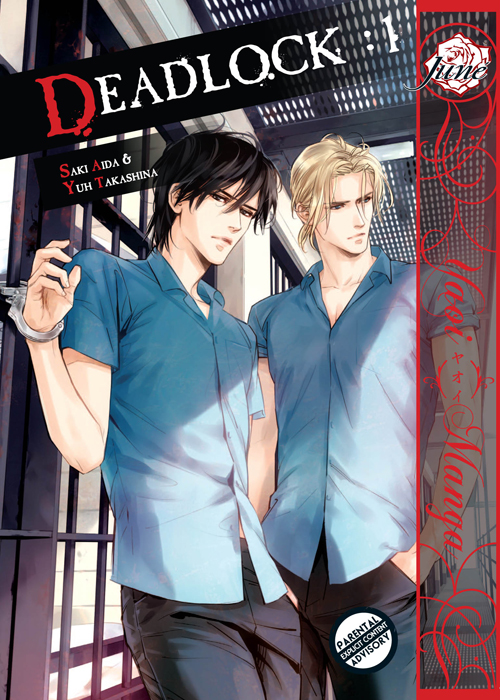
The first volume of this prison drama series is a promising start to a plot-driven story featuring a cast of characters so good-looking that at times it looks like a prison for male models. Yuto Lennix is found guilty for a crime he didn't commit: the murder of his partner in the Drug Enforcement Administration (DEA). He is sentenced to fifteen years but an FBI agent offers him a chance at immediate release if he can find a suspected terrorist leader thought to be directing a cult organisation from inside prison. With no support, Yuto enters the California Schelger prison as just another inmate, determined to root out the terrorist leader and gain his freedom.
The immediate draw for this manga are those beautiful guys on the cover, how can they look so catwalk perfect in prison? The art throughout is good and the manga delivers on story too. The only comparison I have for prison manga is Sadahiro Mika's brutal and dramatic Under Grand Hotel series but Deadlock is an entirely different kind of story, it's a more sanitised, prettier version of prison life, less grim and muted in tone compared to the often melodramatic Under Grand Hotel. Its more understated approach makes for a more believable story, aided by a realistic prison setting created by author of the original light novel, Aida Saki, and adapted into this manga by Takashina Yuh (or Yuu, DMP can't seem to decide on standardising their romaji spelling).
There isn't any romance in this first volume which is not a bad thing since the story busies itself with world-building and establishing the large cast of characters. The depiction of prison life in itself is interesting and, as I found out after some googling, is based on the real life California state prison system. In the story, the inmates are housed in different blocks according to race and it is the race-based gangs who have the running of the place. Unfamiliar with American prisons (or any prisons), I was surprised to learn that this practice of racial segregation has indeed been used by California for many years, though there have been moves in recent years to curtail the practice on the basis of it being unconstitutional. Aida Saki obviously did some research as the names of the gangs are also adapted from real life gangs; the black group is called the Black Soldiers, a variant of the real life Black Guerrillas; the white group is called the ABL and, though the acronym is not explained in this volume, it's more than likely a variant of the real life Aryan Brotherhood.
Race is naturally a big theme in the story, the other big one being prison rape culture (though I'm not sure how true to life this aspect of the story is). This is BL so it's not like it's unexpected but it's still uncomfortable, to say the least. It's the norm for stronger inmates to take weaker inmates as 'substitute women' and Yuto is targeted by a leader of the Black Soldiers on his first day. Rape is constantly talked about but there is no actual rape scene in this volume. Generally, the manga shies away from depicting graphic violence, there are fights and murder but Takashina does not linger at all and those scenes are limited to a few panels. Though this results in less impactful drama, it does prevent the mood from turning too bleak. There's a general emotional distance to the story so although it's not depressing, it's also not as involving as it could be.
Along with his enigmatic cellmate (and obvious destined boyfriend), Dick, who's sometimes nice and sometimes cold, Yuto makes friends with a nice group of people who teach him about prison life, about the gangs and dangerous inmates to avoid. A lot of people are introduced in this volume and Takashina does enough to sketch out the personalities of each character as they appear so that they are distinct and memorable, though so far none of the characters have much depth. Yuto is a typical stoic hero and Dick is a lone rebel with a past type; they're still getting to know each other by the end of the volume so I'm prepared to reserve judgement on characterisation for later volumes when they do grow closer, though I suspect that in the end looks will win out over personality.
One issue I have with the story is with its treatment of the 'sisters', a group of transgender women inmates. The group is mostly there for comic relief and some cheap jokes are made at their expense. The plot and the writing are not particularly strong in originality but the cliched trans jokes are irksome, though they do probably mimic real life attitudes, especially of an all-male prison environment. However, Aida makes up for the casual discrimination with a strong supporting character in one of the women, a defender of her fellow sisters who are regular victims of rape and violence, and a respected figure among the inmates.
Volume one lays the groundwork for an interesting story, setting the stage and introducing the players, preparing for the plot to really kick into action in the next volume, which I look forward to (though it'll probably be a long time in coming since volume two isn't even out yet in Japan and then DMP are soooo slow). Characterisation certainly needs some work and the romance isn't even at the start line but the steady pacing hopefully means that the relationship won't be rushed into and we can anticipate a gradual romance developing between the bishies.
Showing posts with label DMP. Show all posts
Thursday, 3 April 2014
Wednesday, 26 March 2014
President Momoi Kun by Nishida Higashi
Rating: 6
Juné 2013 - Akaneshinsha 2011 - Opera 2008
1 volume
Translation: Laura Russell
I don't know how DMP choose their BL print licenses but I've long suspected that, outside of established popular series like Viewfinder, Tyrant Falls in Love, or recent acquisition Saezuru Tori wa Habatakanai, the strategy is anything goes, and popularity back in Japan is not a necessary part of their criteria. This has resulted in some real stinkers, a lot of mediocre titles, and some occasional gems from lesser-known mangaka. President Momoi Kun is not quite a gem but it is by a mangaka I like but thought had little of hope of being published in English, and so in this instance I'm grateful to Digital for their seemingly filterless approach to licensing.
President Momoi Kun is a BL gag manga, with the emphasis very much on the comedy. Momoi starts a new job as company president after the previous president, his father, was driven out of the company. He's known as the idiot son, a puppet president, but this doesn't deter Momoi in the slightest, he's there for one reason only...
He soon falls for a colleague and tries to win his love, while largely ignoring all the office politics and intrigues surrounding him.
The story doesn't take itself too seriously, any threat of sobriety is soon relieved with a joke (good or consciously bad). There's a lot of fun poked at the BL genre and manga in general. Whether you'll like this manga is mostly dependent on how you find Nishida's humour. While there's a lot of slapstick sort of comedy in the story, I think Nishida is an intelligent, thoughtful writer, and this is reflected in her work, whatever she writes. Her main characters never become caricatures, beneath the surface shenanigans, they still come across as regular people with normal hopes and fears like the rest of us. Amidst the gags, a sweet and considered romance develops between Momoi and his crush and their relationship serves as the backbone to an often featherbrained story.
Rather incongruously, in the middle of the volume there's a side story about one of the supporting characters, unrelated to the main plot. This story is played entirely straight and, though it feels out of place to the lightheartedness of the rest of the volume, it serves as a spotlight on Nishida's more serious storytelling talents. She's a writer who prefers to show rather than tell, leaving a lot to the reader's imagination, and this trait is more effectively used in the serious side story about a man who has waited twenty years for the man he loves to be released from prison.
Nishida doesn't have the pretty style of art that can appeal to readers who buy based on artwork, nor does she write emotional heart-tugging stories that can easily reel readers in, instead she offers more measured, often deliberate, perceptive storytelling. President Momoi Kun isn't the best showcase of her style but it's certainly much more than the frivolous shtick it appears to be.
Juné 2013 - Akaneshinsha 2011 - Opera 2008
1 volume
Translation: Laura Russell
I don't know how DMP choose their BL print licenses but I've long suspected that, outside of established popular series like Viewfinder, Tyrant Falls in Love, or recent acquisition Saezuru Tori wa Habatakanai, the strategy is anything goes, and popularity back in Japan is not a necessary part of their criteria. This has resulted in some real stinkers, a lot of mediocre titles, and some occasional gems from lesser-known mangaka. President Momoi Kun is not quite a gem but it is by a mangaka I like but thought had little of hope of being published in English, and so in this instance I'm grateful to Digital for their seemingly filterless approach to licensing.
President Momoi Kun is a BL gag manga, with the emphasis very much on the comedy. Momoi starts a new job as company president after the previous president, his father, was driven out of the company. He's known as the idiot son, a puppet president, but this doesn't deter Momoi in the slightest, he's there for one reason only...
He soon falls for a colleague and tries to win his love, while largely ignoring all the office politics and intrigues surrounding him.
The story doesn't take itself too seriously, any threat of sobriety is soon relieved with a joke (good or consciously bad). There's a lot of fun poked at the BL genre and manga in general. Whether you'll like this manga is mostly dependent on how you find Nishida's humour. While there's a lot of slapstick sort of comedy in the story, I think Nishida is an intelligent, thoughtful writer, and this is reflected in her work, whatever she writes. Her main characters never become caricatures, beneath the surface shenanigans, they still come across as regular people with normal hopes and fears like the rest of us. Amidst the gags, a sweet and considered romance develops between Momoi and his crush and their relationship serves as the backbone to an often featherbrained story.
Rather incongruously, in the middle of the volume there's a side story about one of the supporting characters, unrelated to the main plot. This story is played entirely straight and, though it feels out of place to the lightheartedness of the rest of the volume, it serves as a spotlight on Nishida's more serious storytelling talents. She's a writer who prefers to show rather than tell, leaving a lot to the reader's imagination, and this trait is more effectively used in the serious side story about a man who has waited twenty years for the man he loves to be released from prison.
Nishida doesn't have the pretty style of art that can appeal to readers who buy based on artwork, nor does she write emotional heart-tugging stories that can easily reel readers in, instead she offers more measured, often deliberate, perceptive storytelling. President Momoi Kun isn't the best showcase of her style but it's certainly much more than the frivolous shtick it appears to be.
Friday, 16 August 2013
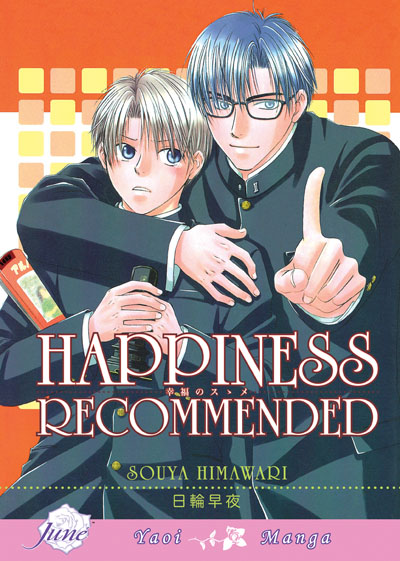
Happiness Recommended by Himawari Souya
Rating: 5
Juné 2008 - Houbunsha 2003
1 volume
Translation: Melanie Schoen
I liked Himawari Souya's Right Here, Right Now that
Juné put out in 2011 so I thought I'd check out this earlier title of hers but although happiness is recommended I'm not entirely sure it's delivered, for the reader, at least.
Yukiharu's grandfather has died and left him orphaned and alone in the world, until he learns that his parents didn't die in a car crash when he was little, as he was told by his grandfather, but that they are still living and he also has six brothers he's never met. It turns out that when he was young his grandfather thought his parents too irresponsible to raise Yukiharu and took him away. It appears that the parents haven't improved a jot because when Yukiharu goes to meet his family, the parents have done a runner and left the brothers to fend for themselves. Flat broke, his brothers don't appreciate gaining another mouth to feed and Yukiharu worries about fitting in with his new family. On top of that there's the strange neighbour, Makoto, who calls him 'Haru-chan', says Haru-chan has always been his favourite, and hugs him at every given opportunity.
Happiness Recommended is a light romantic comedy that can't decide whether it wants to be a family drama story or a romance (a point that the mangaka admits in the afterword). On the whole it veers more toward the family drama and makes a rather half-hearted attempt at the romance. I like Himawari's relaxed flowing narrative but the story doesn't quite have the chops to make it interesting enough as a stand-alone family drama. There are too many characters, not enough time developing all those characters, and though a few of them showed signs of life there just weren't enough chapters to do them justice. You get the sense that Himawari bit off more than she could chew with this set-up. I might've scored the manga higher if she'd made up for it with the romance but that side of the story ends in a decidedly unsatisfying manner. As if there isn't enough going on, there's a secondary romantic couple, the 2nd brother x Makoto's twin (gah, too much confusion when they all look alike), whose story threatens to steal the show but, frustratingly, is only teased at.
It's an enjoyable enough read but it doesn't leave you with a feeling of fulfilment because there was too much that went unexplored both in the familial and romantic relationships. This is a volume destined for the 'one-off read' pile, methinks. I still like Himawari's writing a lot and though the story was a tad too thin here it hasn't put me off from reading more of her work in the future. If you've never read any of her work before I'd recommend finding a copy of Right Here, Right Now and leaving Happiness Recommended for some time when there's a lull in your BL-buying schedule.
Juné 2008 - Houbunsha 2003
1 volume
Translation: Melanie Schoen
I liked Himawari Souya's Right Here, Right Now that
Juné put out in 2011 so I thought I'd check out this earlier title of hers but although happiness is recommended I'm not entirely sure it's delivered, for the reader, at least.
Yukiharu's grandfather has died and left him orphaned and alone in the world, until he learns that his parents didn't die in a car crash when he was little, as he was told by his grandfather, but that they are still living and he also has six brothers he's never met. It turns out that when he was young his grandfather thought his parents too irresponsible to raise Yukiharu and took him away. It appears that the parents haven't improved a jot because when Yukiharu goes to meet his family, the parents have done a runner and left the brothers to fend for themselves. Flat broke, his brothers don't appreciate gaining another mouth to feed and Yukiharu worries about fitting in with his new family. On top of that there's the strange neighbour, Makoto, who calls him 'Haru-chan', says Haru-chan has always been his favourite, and hugs him at every given opportunity.
Happiness Recommended is a light romantic comedy that can't decide whether it wants to be a family drama story or a romance (a point that the mangaka admits in the afterword). On the whole it veers more toward the family drama and makes a rather half-hearted attempt at the romance. I like Himawari's relaxed flowing narrative but the story doesn't quite have the chops to make it interesting enough as a stand-alone family drama. There are too many characters, not enough time developing all those characters, and though a few of them showed signs of life there just weren't enough chapters to do them justice. You get the sense that Himawari bit off more than she could chew with this set-up. I might've scored the manga higher if she'd made up for it with the romance but that side of the story ends in a decidedly unsatisfying manner. As if there isn't enough going on, there's a secondary romantic couple, the 2nd brother x Makoto's twin (gah, too much confusion when they all look alike), whose story threatens to steal the show but, frustratingly, is only teased at.
It's an enjoyable enough read but it doesn't leave you with a feeling of fulfilment because there was too much that went unexplored both in the familial and romantic relationships. This is a volume destined for the 'one-off read' pile, methinks. I still like Himawari's writing a lot and though the story was a tad too thin here it hasn't put me off from reading more of her work in the future. If you've never read any of her work before I'd recommend finding a copy of Right Here, Right Now and leaving Happiness Recommended for some time when there's a lull in your BL-buying schedule.
Labels:
DMP,
Happiness Recommended,
Himawari Souya,
Juné,
Koufuku no Susume
Monday, 13 May 2013
Mr Tiger and Mr Wolf 1 by Haruno Ahiru
Rating: 5
Juné 2011 - Houbunsha 2009
4 volumes
Translation: Jocelyne Allen
When Juné released this in English I remember there was some buzz around it and the first volume sold out fairly quickly. I'd read something else by the mangaka before which didn't impress so this wasn't high on my priority list at the time and passed me by. I recently came across a reasonably priced copy of this and, recalling the positive buzz, decided to check it out. Was it worth the extra few quid a hard-to-find manga demands? Well, not really, not for me. And yet I can see why it has its fans and has spawned 4 volumes plus a spin-off in Japan.
The story is about a wolf who kidnaps an adorable kitten whom he thinks is the perfect candidate for his future wife, only to be shocked when the kitten grows up to be a huge tiger, and male to boot. The character artwork is pretty, the kitten tiger is so cute I would defy anyone not to turn criminal and kidnap him on first sight (despite sporting freakishly thin arms, even for a chibi character), Tiger and Wolf are appealing characters, the sort that I'd usually want to read more about. Wolf is a tsundere type whose standoffish attitude belies his kind nature and his actions easily demonstrate his affection for Tiger despite his grouchiness. Tiger is a tiger in kitten's clothing? His sweet smile masks a possessive passionate personality; he's a typical dominant seme through and through.
So I like all the above and would usually settle in happily for some lighthearted fluff except it all falls apart in the actual story-telling. There's no ongoing plot, which is fine, this is BL romance, plot is not required. What is required are episodes to develop the characters' personalities, bring them closer to one another and further their relationship. The story does do this, though in very short and rather anticlimactic spurts (no sexy pun intended). Each chapter throws in some sort of obstacle or conflict to highlight an aspect of their relationship, there's a disapproving elder brother, there's the matter of the difference in their lifespans, the practicalities of being different species, and so on, but the resolution is always rushed, there's little preamble to the mandatory sex scene, each mini-story always falls rather flat.
The elements are there for a good story but there's little effort made to build suspense or tension or any sort of hook to pull you into the story. Often, it felt more like I was reading a doujinshi than a proper series. I liked the characters but couldn't get interested in the story enough to really care about them much. At four volumes I guess there's enough in the series to keep some people reading but I won't be going further than volume one.
Juné 2011 - Houbunsha 2009
4 volumes
Translation: Jocelyne Allen
When Juné released this in English I remember there was some buzz around it and the first volume sold out fairly quickly. I'd read something else by the mangaka before which didn't impress so this wasn't high on my priority list at the time and passed me by. I recently came across a reasonably priced copy of this and, recalling the positive buzz, decided to check it out. Was it worth the extra few quid a hard-to-find manga demands? Well, not really, not for me. And yet I can see why it has its fans and has spawned 4 volumes plus a spin-off in Japan.
The story is about a wolf who kidnaps an adorable kitten whom he thinks is the perfect candidate for his future wife, only to be shocked when the kitten grows up to be a huge tiger, and male to boot. The character artwork is pretty, the kitten tiger is so cute I would defy anyone not to turn criminal and kidnap him on first sight (despite sporting freakishly thin arms, even for a chibi character), Tiger and Wolf are appealing characters, the sort that I'd usually want to read more about. Wolf is a tsundere type whose standoffish attitude belies his kind nature and his actions easily demonstrate his affection for Tiger despite his grouchiness. Tiger is a tiger in kitten's clothing? His sweet smile masks a possessive passionate personality; he's a typical dominant seme through and through.
So I like all the above and would usually settle in happily for some lighthearted fluff except it all falls apart in the actual story-telling. There's no ongoing plot, which is fine, this is BL romance, plot is not required. What is required are episodes to develop the characters' personalities, bring them closer to one another and further their relationship. The story does do this, though in very short and rather anticlimactic spurts (no sexy pun intended). Each chapter throws in some sort of obstacle or conflict to highlight an aspect of their relationship, there's a disapproving elder brother, there's the matter of the difference in their lifespans, the practicalities of being different species, and so on, but the resolution is always rushed, there's little preamble to the mandatory sex scene, each mini-story always falls rather flat.
The elements are there for a good story but there's little effort made to build suspense or tension or any sort of hook to pull you into the story. Often, it felt more like I was reading a doujinshi than a proper series. I liked the characters but couldn't get interested in the story enough to really care about them much. At four volumes I guess there's enough in the series to keep some people reading but I won't be going further than volume one.
Labels:
DMP,
Haruno Ahiru,
Juné,
Mr Tiger and Mr Wolf,
Tora-san to Ookami-san
Wednesday, 6 February 2013
Caramel by Okuyama Puku
Rating: 6
Juné 2012 - Taiyoh Tosho 2012
1 volume
Translation: Jocelyne Allen
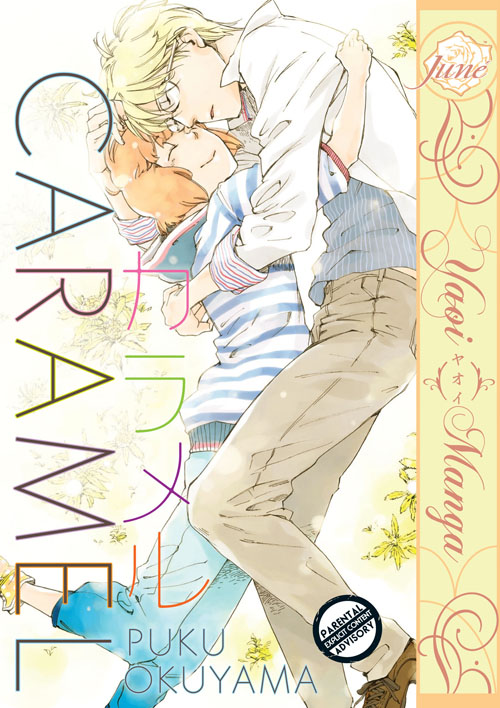
Caramel is a sweet, cute and happy story that's utterly harmless. It's generic in its setup, character types and plot but Okuyama has a cute quirky style to her art that gives the story a refreshing unique feel and sets it apart from the myriad of BL manga that use similar storylines.
Iori is off to Tokyo to start university and needs to find a place to live. He sees an advert for a free room in exchange for doing all housework and, used to looking after the house and caring for his three young siblings, decides it's the deal for him. Things get off to a rocky start when he meets his roommate, 28 year old wealthy businessman Roku, who is decidedly strange. Roku is abrupt, bossy and likes to tease Iori. He insists on Iori cooking him a meal as soon as he arrives, later Iori discovers that Roku has forgotten to buy any furniture for his room, and to top if off, in the middle of the night Iori wakes up to find that Roku has crawled in to sleep beside him on the sofa. As much as Roku infuriates him, Iori can't turn his back on him when he sees Roku happily eating his cooking and snuggling up to Iori in sleep like a trusting child.
Iori is an adorable, caring, innocent, bubbly soul and Roku is the more worldly, crotchety, egocentric grown-up. They play off each other as a decent comedic duo and, though there's not much depth to their characters, they're both very likeable and carry the story well. Iori is often drawn in cute chibi form, usually to comically illustrate his disbelieving reactions to Roku's antics, whom he views as a big kid he has to take care of, one that's less well-behaved than his own younger brothers and sister. For Roku, who has been living the lonely bachelor life, Iori brings the warmth and affection into his life that he hadn't known he'd been missing.
Nothing much of dramatic significance happens in the story, it's mainly about the two getting to know each other and gradually falling in love. The pace is unhurried, the relationship is given time to develop and, unlike a previous Okuyama title I read, there's a nice satisfactory ending where they have some sexy time after mutual declaration of their love. There are no surprises and not much in the way of originality but all in all, it's a very nice manga that's pleasant to read with just enough offbeat individuality to stamp it as an Okuyama title.
Juné 2012 - Taiyoh Tosho 2012
1 volume
Translation: Jocelyne Allen
Caramel is a sweet, cute and happy story that's utterly harmless. It's generic in its setup, character types and plot but Okuyama has a cute quirky style to her art that gives the story a refreshing unique feel and sets it apart from the myriad of BL manga that use similar storylines.
Iori is off to Tokyo to start university and needs to find a place to live. He sees an advert for a free room in exchange for doing all housework and, used to looking after the house and caring for his three young siblings, decides it's the deal for him. Things get off to a rocky start when he meets his roommate, 28 year old wealthy businessman Roku, who is decidedly strange. Roku is abrupt, bossy and likes to tease Iori. He insists on Iori cooking him a meal as soon as he arrives, later Iori discovers that Roku has forgotten to buy any furniture for his room, and to top if off, in the middle of the night Iori wakes up to find that Roku has crawled in to sleep beside him on the sofa. As much as Roku infuriates him, Iori can't turn his back on him when he sees Roku happily eating his cooking and snuggling up to Iori in sleep like a trusting child.
Iori is an adorable, caring, innocent, bubbly soul and Roku is the more worldly, crotchety, egocentric grown-up. They play off each other as a decent comedic duo and, though there's not much depth to their characters, they're both very likeable and carry the story well. Iori is often drawn in cute chibi form, usually to comically illustrate his disbelieving reactions to Roku's antics, whom he views as a big kid he has to take care of, one that's less well-behaved than his own younger brothers and sister. For Roku, who has been living the lonely bachelor life, Iori brings the warmth and affection into his life that he hadn't known he'd been missing.
Nothing much of dramatic significance happens in the story, it's mainly about the two getting to know each other and gradually falling in love. The pace is unhurried, the relationship is given time to develop and, unlike a previous Okuyama title I read, there's a nice satisfactory ending where they have some sexy time after mutual declaration of their love. There are no surprises and not much in the way of originality but all in all, it's a very nice manga that's pleasant to read with just enough offbeat individuality to stamp it as an Okuyama title.
Wednesday, 23 January 2013
Ninth Life Love by Kojima Lalako
Rating: 5
Juné 2012 - Taiyoh Tosho 2011
1 volume
Translation: Jocelyne Allen
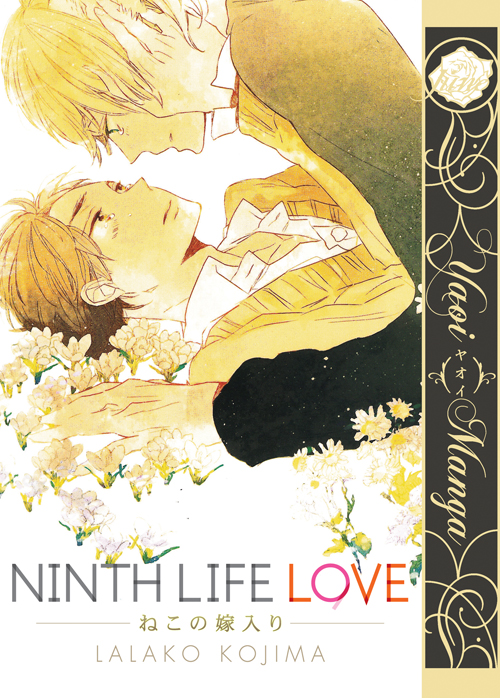
Happy, sweet, mellow, Ninth Life Love is a very 'nice' manga, and delivers pretty much what you would expect it to from its soft and pretty cover illustration. It's a pleasant leisurely read, the artwork is pretty in its fluttery gentle way, the character illustrations are expressive and have a natural feel to them, and for some people this is exactly the sort of thing they look for in BL manga. Me, I need, I don't know, a bit of ugly in my manga? Which you certainly won't find in this book, everything's just too nice. There's nothing ostensibly wrong with it but then there's nothing remarkable about it either, it's an easy read for whiling away an hour or two but otherwise forgettable.
There are four stories in the book with the main story, Ninth Life Love (what a tongue-twister), taking up half of the volume and three additional one-shots. The main story, about a boy whose dead cat comes back to life as a human (with cat ears and a tail), is actually pretty good. The condition God gave to the cat was that he couldn't have sex otherwise he'd turn to foam and disappear, a rather strange condition if you ask me but this is BL so whatever. So although the couple are overjoyed at reuniting, the danger of the cat-boy disappearing is a constant cloud over their heads, a setup which gives the story a bittersweet taste throughout as the reader wonders whether they'll get a happy ending.
When I say this is an easy read, I mean that the story quickly pulls me in with little effort, I become absorbed in the feelings of the characters and the pace of the story guides me to the end without my attention waning. This is something the manga accomplishes easily. What it fails to effect is any deep or lasting impression. The characters in all the stories lack personality, there's not enough depth to the stories, not enough exploration of feelings nor themes. I think the premise of the main story offers a wealth of themes to explore, like the concept of a second chance at life, the transience of life and feelings, the constancy of love, none of which was really touched on by the mangaka. This could possibly be due to the limited number of pages she had to work with, the ending was certainly rushed, but whatever the reasons, I felt that there was a lot of potential to the story that was unrealised.
In the afterword, referring to the last one-shot the mangaka says, "I get told that my story feels like uke x uke, just because they're sweet guys who love flowers..." I think the uke x uke comment applies to most of the couples in the volume, the characters are all a bit wishy-washy sweet, which is part of the reason I didn't personally care much for any of them since I prefer a manlier man myself. Of course there are many readers who do like these types of characters and this style of story so I'm not surprised that there are fans of this manga out there (it made the top 20 of the popularity poll Kono BL ga Yabai! 2012); so although not one for me, there's still enough good about it to recommend it as a one-off read to readers whose tastes lean this way.
Juné 2012 - Taiyoh Tosho 2011
1 volume
Translation: Jocelyne Allen
Happy, sweet, mellow, Ninth Life Love is a very 'nice' manga, and delivers pretty much what you would expect it to from its soft and pretty cover illustration. It's a pleasant leisurely read, the artwork is pretty in its fluttery gentle way, the character illustrations are expressive and have a natural feel to them, and for some people this is exactly the sort of thing they look for in BL manga. Me, I need, I don't know, a bit of ugly in my manga? Which you certainly won't find in this book, everything's just too nice. There's nothing ostensibly wrong with it but then there's nothing remarkable about it either, it's an easy read for whiling away an hour or two but otherwise forgettable.
There are four stories in the book with the main story, Ninth Life Love (what a tongue-twister), taking up half of the volume and three additional one-shots. The main story, about a boy whose dead cat comes back to life as a human (with cat ears and a tail), is actually pretty good. The condition God gave to the cat was that he couldn't have sex otherwise he'd turn to foam and disappear, a rather strange condition if you ask me but this is BL so whatever. So although the couple are overjoyed at reuniting, the danger of the cat-boy disappearing is a constant cloud over their heads, a setup which gives the story a bittersweet taste throughout as the reader wonders whether they'll get a happy ending.
When I say this is an easy read, I mean that the story quickly pulls me in with little effort, I become absorbed in the feelings of the characters and the pace of the story guides me to the end without my attention waning. This is something the manga accomplishes easily. What it fails to effect is any deep or lasting impression. The characters in all the stories lack personality, there's not enough depth to the stories, not enough exploration of feelings nor themes. I think the premise of the main story offers a wealth of themes to explore, like the concept of a second chance at life, the transience of life and feelings, the constancy of love, none of which was really touched on by the mangaka. This could possibly be due to the limited number of pages she had to work with, the ending was certainly rushed, but whatever the reasons, I felt that there was a lot of potential to the story that was unrealised.
In the afterword, referring to the last one-shot the mangaka says, "I get told that my story feels like uke x uke, just because they're sweet guys who love flowers..." I think the uke x uke comment applies to most of the couples in the volume, the characters are all a bit wishy-washy sweet, which is part of the reason I didn't personally care much for any of them since I prefer a manlier man myself. Of course there are many readers who do like these types of characters and this style of story so I'm not surprised that there are fans of this manga out there (it made the top 20 of the popularity poll Kono BL ga Yabai! 2012); so although not one for me, there's still enough good about it to recommend it as a one-off read to readers whose tastes lean this way.
Labels:
DMP,
Juné,
Kojima Lalako,
Neko no Yomeiri,
Ninth Life Love
Sunday, 30 December 2012
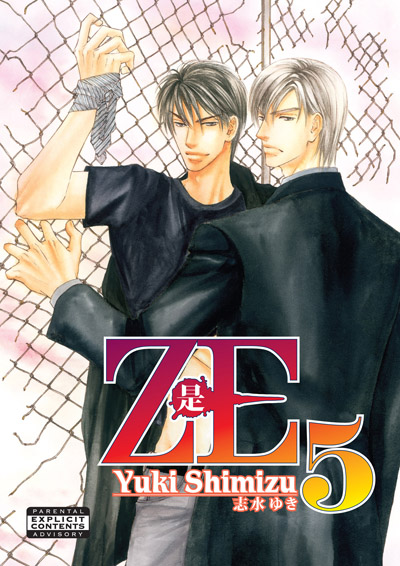
Ze by Shimizu Yuki
Rating: 9
801 Media 2009 - Shinshokan 2004
11 volumes
Translation: Leona Wong (v1-6), Laura Russell (v7)
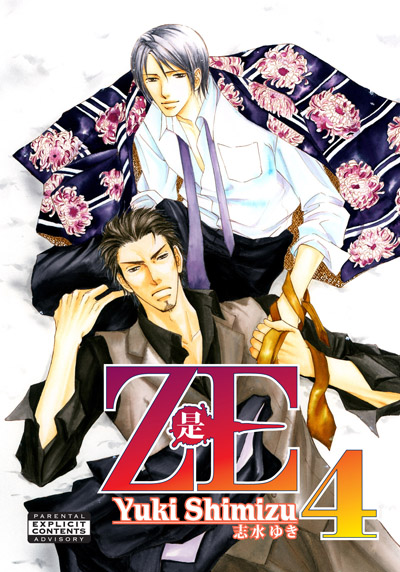
If you've never gotten around to reading Ze, now's a good time to do so; most of the series was out of print for a long time but recently DMP have reprinted several volumes so at time of writing volumes 1-5 are available. For me, it's easily a must-read BL manga, extremely popular in and outside of Japan, it's a modern-day fantasy drama featuring a variety of different couples and chances are that you'll like at least one of them and become a smitten fan like so many others before.
The story revolves around the Mitou family whose members have the supernatural ability to use 'kotodama' - the power to create reality with words, an ability the 'kotodama-sama' (kotodama-master) can use to cause injury to a person and even death. The power comes with a price, each time they use it they incur an injury on their own body with the stronger the spell, the heavier the injury. To counteract this they use 'kami', living dolls made out of paper that look and act exactly like humans, to take on the injuries on their behalf; there are two methods of doing so, either by transferring injuries with a spell or by exchange of bodily fluids. Since it is tradition for the master-doll pair to be of the same sex, that's where all the BL shenanigans come in.
The story begins with what is probably the weakest couple in the series, however, get past their story and thankfully there are more interesting characters lying in wait. Left homeless after the death of his beloved grandmother, teenager Raizou takes up a job as a live-in housekeeper at the Mitou house. Raizou is a normal human and through his eyes the reader discovers the mysterious world of the Mitous. Raizou soon falls for his roommate, Kon, a kami with no master. Raizou, a cheerful good-boy type of guy is a decent enough character but Kon, an expressionless inscrutable type, has about as much personality as a plank of wood. Kon aside, the story is written solidly enough and the world of the kotodamas is interesting enough to tide you over to the next couple, Genma and Himi, who feature in volumes three and four. While there is a touch of drama in the Raizou/Kon story, the tone of their story is mostly upbeat, heartwarming and lightened with comedic moments, a reflection of Raizou's optimistic outlook on life; in the Genma/Hibi arc, the drama comes to the fore and poignant drama is really what Shimizu excels at.
Genma, a brooding irascible man, inherits the kami, Himi, from his father after his death. Genma hated his father when he was alive and as soon as he inherits his kami he forces Himi into a sexual relationship. Himi, who is by nature reserved and proper, is deeply embarrassed and doesn't know what to make of Genma's attitude, and so begins their troubled relationship as master and doll. This couple is probably the most popular amongst fans, something which I suspect has to do with all the sex they have; Genma wants it all the time and Shimizu is not shy on delivering. The relationship between Raizou and Kon is one of sweet puppy love but in stark contrast the one between Genma and Himi is adult (explicitly so) and angst-ridden, which evidently appeals to a majority of readers.
For those who like their drama even more tragic and raw, there's Moriya and Ryusei in volumes five and six. This is the darkest and most despairing of the arcs in the series. Ryusei is a kotodama-sama who has stopped using kotodama because of tragic incidents in his past. Moriya is a kami who, after the death of his previous master, needs to persuade Ryusei to become a proper kotodama-sama and his new master so that Moriya does not suffer the fate of masterless kami, which is to be destroyed. The Moriya/Ryusei arc is emotionally brutal and, as someone who prefers romantic fluff, I found it quite hard to read, but of course this is manna for some and the couple have a solid faction of supporters within the fandom.
My favourite couple are Konoe and Kotoha who, although introduced in volume one, don't feature until volumes seven and eight. The story of the couple after them, Shoui and Asari, brought me to the verge of tears. It was after reading the arcs of these two couples that the series was bumped up from being 'pretty good' to 'excellent' in my mind. Different people will have different preferences but there is enough variety to go around and the plot and characters are consistently strong so that every arc is engrossing.
Through the various stories of the characters we learn more about the Mitou family and the burdens that their supernatural powers place on them. The fundamental problem for each couple is that the relationship is one between human and kami, which poses all sorts of difficulties, especially when the lifespans of the two can be very different. With Ze Shimizu creates an intriguing world which she explores through fascinating characters. Few BL series last more than a few volumes but the world created in Ze provides a rich source for stories. To fans familiar with Shimizu's earlier work, I'd say that Ze is even better than her other multi-volume series Love Mode, the art certainly so.
If you've not tried this series yet, you're missing out. The premise and scope of the series instantly makes it more ambitious than the majority of BL out there. Ze is a good example of a fantasy series done straight and done well, BL or otherwise. The supernatural elements are fascinating in and of themselves but it is where they're used to explore human nature and emotion that the story really draws its strengths. The power of the Mitous is thought of more as a curse by its members and the series has an underlying forlorn atmosphere throughout yet the ability the characters have to overcome their bleak circumstances deliver touching moments one after another. Shimizu has created a truly memorable series with a cast of individual charismatic characters; at times heartbreaking, often funny, and at other times moving, it is a series that I think will stand the test of time and captivate new readers for years to come.
801 Media 2009 - Shinshokan 2004
11 volumes
Translation: Leona Wong (v1-6), Laura Russell (v7)
If you've never gotten around to reading Ze, now's a good time to do so; most of the series was out of print for a long time but recently DMP have reprinted several volumes so at time of writing volumes 1-5 are available. For me, it's easily a must-read BL manga, extremely popular in and outside of Japan, it's a modern-day fantasy drama featuring a variety of different couples and chances are that you'll like at least one of them and become a smitten fan like so many others before.
The story revolves around the Mitou family whose members have the supernatural ability to use 'kotodama' - the power to create reality with words, an ability the 'kotodama-sama' (kotodama-master) can use to cause injury to a person and even death. The power comes with a price, each time they use it they incur an injury on their own body with the stronger the spell, the heavier the injury. To counteract this they use 'kami', living dolls made out of paper that look and act exactly like humans, to take on the injuries on their behalf; there are two methods of doing so, either by transferring injuries with a spell or by exchange of bodily fluids. Since it is tradition for the master-doll pair to be of the same sex, that's where all the BL shenanigans come in.
The story begins with what is probably the weakest couple in the series, however, get past their story and thankfully there are more interesting characters lying in wait. Left homeless after the death of his beloved grandmother, teenager Raizou takes up a job as a live-in housekeeper at the Mitou house. Raizou is a normal human and through his eyes the reader discovers the mysterious world of the Mitous. Raizou soon falls for his roommate, Kon, a kami with no master. Raizou, a cheerful good-boy type of guy is a decent enough character but Kon, an expressionless inscrutable type, has about as much personality as a plank of wood. Kon aside, the story is written solidly enough and the world of the kotodamas is interesting enough to tide you over to the next couple, Genma and Himi, who feature in volumes three and four. While there is a touch of drama in the Raizou/Kon story, the tone of their story is mostly upbeat, heartwarming and lightened with comedic moments, a reflection of Raizou's optimistic outlook on life; in the Genma/Hibi arc, the drama comes to the fore and poignant drama is really what Shimizu excels at.
Genma, a brooding irascible man, inherits the kami, Himi, from his father after his death. Genma hated his father when he was alive and as soon as he inherits his kami he forces Himi into a sexual relationship. Himi, who is by nature reserved and proper, is deeply embarrassed and doesn't know what to make of Genma's attitude, and so begins their troubled relationship as master and doll. This couple is probably the most popular amongst fans, something which I suspect has to do with all the sex they have; Genma wants it all the time and Shimizu is not shy on delivering. The relationship between Raizou and Kon is one of sweet puppy love but in stark contrast the one between Genma and Himi is adult (explicitly so) and angst-ridden, which evidently appeals to a majority of readers.
For those who like their drama even more tragic and raw, there's Moriya and Ryusei in volumes five and six. This is the darkest and most despairing of the arcs in the series. Ryusei is a kotodama-sama who has stopped using kotodama because of tragic incidents in his past. Moriya is a kami who, after the death of his previous master, needs to persuade Ryusei to become a proper kotodama-sama and his new master so that Moriya does not suffer the fate of masterless kami, which is to be destroyed. The Moriya/Ryusei arc is emotionally brutal and, as someone who prefers romantic fluff, I found it quite hard to read, but of course this is manna for some and the couple have a solid faction of supporters within the fandom.My favourite couple are Konoe and Kotoha who, although introduced in volume one, don't feature until volumes seven and eight. The story of the couple after them, Shoui and Asari, brought me to the verge of tears. It was after reading the arcs of these two couples that the series was bumped up from being 'pretty good' to 'excellent' in my mind. Different people will have different preferences but there is enough variety to go around and the plot and characters are consistently strong so that every arc is engrossing.
Through the various stories of the characters we learn more about the Mitou family and the burdens that their supernatural powers place on them. The fundamental problem for each couple is that the relationship is one between human and kami, which poses all sorts of difficulties, especially when the lifespans of the two can be very different. With Ze Shimizu creates an intriguing world which she explores through fascinating characters. Few BL series last more than a few volumes but the world created in Ze provides a rich source for stories. To fans familiar with Shimizu's earlier work, I'd say that Ze is even better than her other multi-volume series Love Mode, the art certainly so.
If you've not tried this series yet, you're missing out. The premise and scope of the series instantly makes it more ambitious than the majority of BL out there. Ze is a good example of a fantasy series done straight and done well, BL or otherwise. The supernatural elements are fascinating in and of themselves but it is where they're used to explore human nature and emotion that the story really draws its strengths. The power of the Mitous is thought of more as a curse by its members and the series has an underlying forlorn atmosphere throughout yet the ability the characters have to overcome their bleak circumstances deliver touching moments one after another. Shimizu has created a truly memorable series with a cast of individual charismatic characters; at times heartbreaking, often funny, and at other times moving, it is a series that I think will stand the test of time and captivate new readers for years to come.
Saturday, 22 December 2012
Warning! Whispers of Love by Okuyama Puku
Rating: 5
Juné 2011 - Taiyo Tosho 2010
1 volume
Translation: Sachiko Sato
Warning! Whispers of Love is a collection of romantic comedy stories, where the emphasis is on the comedy over the romance. The title story takes up half the volume and a bunch of one-shots fill up the rest of the book. Okuyama has a cute lively style to her artwork and story telling, the stories are fairly amusing and I found all of them quite entertaining. However, I also found every story rather unsatisfying; there's a definite lack of depth to the characters and an unwillingness throughout the volume to shift gears into a more serious tone, with the result that this collection is never more than lightweight fluff.
The title story has a very simple premise that's wrung for all its comedic worth: a guy with a fetish for cleaning ears... Hajime is excited to start high school life but he immediately catches the eye of Nagura-senpai, the ear-cleaning obsessive who chases him around campus everyday with an ear-cleaner. It's funnier than it probably sounds. Although not laugh-out-loud funny, the characters are still cute enough and quirky enough to amuse. The story zips along easily and you look forward to the couple blundering towards a happy ending. Except that the story zips right through that happy ending as well. Not enough time is spent on those important romantic moments, as soon as the story gets a whiff of the mood turning the slightest bit serious it immediately skips back into lighthearted mode. There's not enough emotional substance to the story, which is a shame because otherwise the writing is quite solid.
My favourite story in the volume is a one-shot entitled 'My Room' about an introvert guy who meets a cheerful stranger one night who asks if he can crash at the introvert's place for two weeks. The story spends more time on the falling-in-love side of things and though it's only one chapter long, is consequently more satisfying than the main story.
Although this collection of stories was rather average, there's still a charm to Okuyama's work which would impel me to check out more of her stuff and hope to find better in another title, something I believe she is capable of.
Juné 2011 - Taiyo Tosho 2010
1 volume
Translation: Sachiko Sato
Warning! Whispers of Love is a collection of romantic comedy stories, where the emphasis is on the comedy over the romance. The title story takes up half the volume and a bunch of one-shots fill up the rest of the book. Okuyama has a cute lively style to her artwork and story telling, the stories are fairly amusing and I found all of them quite entertaining. However, I also found every story rather unsatisfying; there's a definite lack of depth to the characters and an unwillingness throughout the volume to shift gears into a more serious tone, with the result that this collection is never more than lightweight fluff.
The title story has a very simple premise that's wrung for all its comedic worth: a guy with a fetish for cleaning ears... Hajime is excited to start high school life but he immediately catches the eye of Nagura-senpai, the ear-cleaning obsessive who chases him around campus everyday with an ear-cleaner. It's funnier than it probably sounds. Although not laugh-out-loud funny, the characters are still cute enough and quirky enough to amuse. The story zips along easily and you look forward to the couple blundering towards a happy ending. Except that the story zips right through that happy ending as well. Not enough time is spent on those important romantic moments, as soon as the story gets a whiff of the mood turning the slightest bit serious it immediately skips back into lighthearted mode. There's not enough emotional substance to the story, which is a shame because otherwise the writing is quite solid.
My favourite story in the volume is a one-shot entitled 'My Room' about an introvert guy who meets a cheerful stranger one night who asks if he can crash at the introvert's place for two weeks. The story spends more time on the falling-in-love side of things and though it's only one chapter long, is consequently more satisfying than the main story.
Although this collection of stories was rather average, there's still a charm to Okuyama's work which would impel me to check out more of her stuff and hope to find better in another title, something I believe she is capable of.
Sunday, 9 December 2012
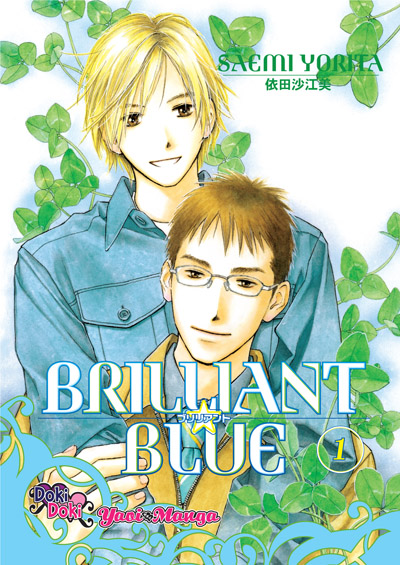
Brilliant Blue by Yorita Saemi
Rating: 8
DokiDoki 2009 - Shinshokan 2004
2 volumes
Translation: Ken Wakita
Brilliant Blue is an unassuming manga that quietly creeps up on you. It's cute and laid-back, a romantic comedy with a fairly typical pairing of smart uptight seme x cheerful dumb uke, it has a simple plot that in the hands of another mangaka would result in a generic story but with Yorita is anything but; Yorita has the kind of writing ability that makes me want to read everything she's ever written, with her effortlessly easy dialogue and an eye for detail that helps her create well-realised characters and well-observed depictions of society. The manga is not flashy in the least, it doesn't have impact visuals nor big dramatic emotional reveals, instead it's those details that pull you in bit by bit. I thoroughly enjoyed the story from start to finish and can't recommend this manga enough.
Shouzo is an up and coming civil engineer but when his father is hospitalised with a back injury he returns home to the countryside to oversee the family construction business. There he is reunited with former classmate, Nanami, who is now an electrician. Nanami used to be a slow fat kid but has grown up into a bishie whom Shouzo doesn't even recognise at first ("when did you become the male character in a shoujo manga?!"). Shouzo dislikes small town life and isn't keen on taking over his father's company but when he falls for Nanami he begins to wonder if he might not stay on after all.
There are many things to like about this manga but the crux of it hangs on whether you like Nanami or not. He displays characteristics of an autistic savant with underdeveloped communicative and social skills yet is a whizz with numbers. I found the character quite confusing at first - is he actually autistic and misunderstood by the neighbourhood as a dim-witted kid? However, Nanami is just so darn cute that soon enough I accepted him for what he is, a childlike innocent naive person with boundless cheer and enthusiasm, who trusts easily and is friendly towards everyone. Chibi Nanami is adorable and cute no matter what he does whether it's eating (he's a glutton, like a cute stray puppy that the neighbours can't help but feed), walking, sleeping or singing a song about Shouzo while folding laundry. Shouzo is a good foil for Nanami and acts as the straight man in their double act; fussy and strict in stark contrast to the spacey Nanami, he's level headed, sensible and is the voice of normalcy, a trait that I wish more manga characters would have. Their relationship is funny and sweet, it's given plenty of time to develop and by the end of volume two I was sad that that was the end, I would have happily read through another volume or two of their antics.
One thing I really like about this manga, and which sets it apart from other BL, is that it's not relentlessly all about the romantic couple, there's a big cast of side characters and care is taken to create a convincing universe around them; the story paints a rosy picture of family and small town life where everyone knows everybody else and one can't escape neighbourhood gossip. I especially like Nanami's overprotective older brothers who try to scare Nanami away from gay sex by saying things like, "your dick will rot off!"
In the afterword, the mangaka says a few things about drawing Nanami like, "Oh wait - I can add a bunch of heart symbols to his dialogue (it's okay, because it's Nanami)" and "He's picking his nose, hee hee (it's okay, because it's Nanami)". I smiled at these comments because they show how much affection Yorita holds for her characters and her feelings are evident in the story which is full of warmth and heart. Brilliant Blue is an older title but there are still copies in stock, if this manga sounds at all like your kind of thing I urge you to buy - a real underrated gem.
DokiDoki 2009 - Shinshokan 2004
2 volumes
Translation: Ken Wakita
Brilliant Blue is an unassuming manga that quietly creeps up on you. It's cute and laid-back, a romantic comedy with a fairly typical pairing of smart uptight seme x cheerful dumb uke, it has a simple plot that in the hands of another mangaka would result in a generic story but with Yorita is anything but; Yorita has the kind of writing ability that makes me want to read everything she's ever written, with her effortlessly easy dialogue and an eye for detail that helps her create well-realised characters and well-observed depictions of society. The manga is not flashy in the least, it doesn't have impact visuals nor big dramatic emotional reveals, instead it's those details that pull you in bit by bit. I thoroughly enjoyed the story from start to finish and can't recommend this manga enough.
Shouzo is an up and coming civil engineer but when his father is hospitalised with a back injury he returns home to the countryside to oversee the family construction business. There he is reunited with former classmate, Nanami, who is now an electrician. Nanami used to be a slow fat kid but has grown up into a bishie whom Shouzo doesn't even recognise at first ("when did you become the male character in a shoujo manga?!"). Shouzo dislikes small town life and isn't keen on taking over his father's company but when he falls for Nanami he begins to wonder if he might not stay on after all.
There are many things to like about this manga but the crux of it hangs on whether you like Nanami or not. He displays characteristics of an autistic savant with underdeveloped communicative and social skills yet is a whizz with numbers. I found the character quite confusing at first - is he actually autistic and misunderstood by the neighbourhood as a dim-witted kid? However, Nanami is just so darn cute that soon enough I accepted him for what he is, a childlike innocent naive person with boundless cheer and enthusiasm, who trusts easily and is friendly towards everyone. Chibi Nanami is adorable and cute no matter what he does whether it's eating (he's a glutton, like a cute stray puppy that the neighbours can't help but feed), walking, sleeping or singing a song about Shouzo while folding laundry. Shouzo is a good foil for Nanami and acts as the straight man in their double act; fussy and strict in stark contrast to the spacey Nanami, he's level headed, sensible and is the voice of normalcy, a trait that I wish more manga characters would have. Their relationship is funny and sweet, it's given plenty of time to develop and by the end of volume two I was sad that that was the end, I would have happily read through another volume or two of their antics.
One thing I really like about this manga, and which sets it apart from other BL, is that it's not relentlessly all about the romantic couple, there's a big cast of side characters and care is taken to create a convincing universe around them; the story paints a rosy picture of family and small town life where everyone knows everybody else and one can't escape neighbourhood gossip. I especially like Nanami's overprotective older brothers who try to scare Nanami away from gay sex by saying things like, "your dick will rot off!"
In the afterword, the mangaka says a few things about drawing Nanami like, "Oh wait - I can add a bunch of heart symbols to his dialogue (it's okay, because it's Nanami)" and "He's picking his nose, hee hee (it's okay, because it's Nanami)". I smiled at these comments because they show how much affection Yorita holds for her characters and her feelings are evident in the story which is full of warmth and heart. Brilliant Blue is an older title but there are still copies in stock, if this manga sounds at all like your kind of thing I urge you to buy - a real underrated gem.
Friday, 9 November 2012
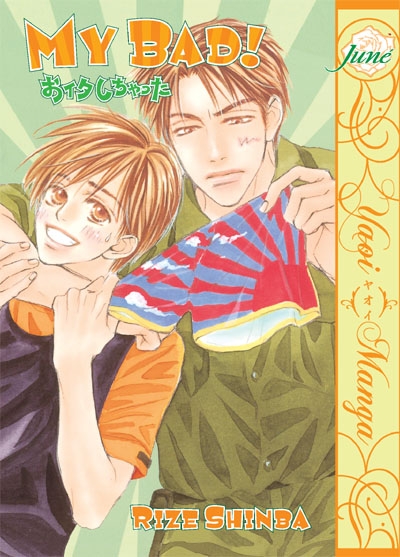
My Bad by Shinba Rize
Rating: 3
Juné 2010 - Houbunsha 2002
1 volume
Translation: Phillip Rankaboshi
My Bad is a collection of mediocre one-shots that range from average to really rather bad. This is some of Shinba's earliest work and boy does it show. The volume cover art is fine but once you open the book you're confronted with an awful title-page illustration of some uke where the anatomical proportion is drawn so bad it actually hurts your eyes. The next title-page illustration is no better. Thankfully the main body of the manga is drawn much better with just a smattering of dodgy disproportionate bodies cropping up but even those few are distracting once you've been put on guard from the first page.
Of the five stories in the volume there is only one that I actually enjoyed, two I thought were so-so, and the other two I mostly frowned through. The one I liked was the fourth story about a high school boy falling for a train conductor whose voice he likes so much that he takes long train journeys just to listen to the conductor's announcements and chat to him on occasion. It's a cute little story that works because the characters are quite likeable (unlike some others in the rest of the anthology) and you can see why they fall for each other. The conductor is an unpretentious straight-talking kind of guy and the uke finds that he can chat to him easily even though he's usually bad at talking to people. The conductor takes an interest in the bratty kid who has a habit of skipping school and I'm happy when they get together because the uke has found someone he can open up to and I'm glad that the seme has found love just because I like him.
The two stories I didn't like feature less affable characters, one has a spoiled selfish uke who cries for a week when the relationship doesn't go his way and the other has an aloof seme who casually rapes his doormat of an uke for the flimsiest of reasons. The title story is about a boy who has a secret crush on his neighbour and stoops to stealing his underpants. The boy's pervertedness is amusing at times but on the whole the story, like the rest in the anthology, is too formulaic and superficial. The last story is of a type that I usually like, cracky gag manga about an idiotic couple, and for this reason was probably the story that I liked second best in the volume. Yasunobu's and Takashi's fathers are leaders of opposing political parties and at school they maintain an antagonistic front but in secret they are passionate lovers who call each other "Yasu-bear" and "Taka-pie"; they view themselves as a modern day Romeo and Juliet. It's silly and cute, and ends with an heroic and heartwarming coming-out.
Though I say I liked one or two of the stories, at best, they were still very average. I was suckered in by the pervy premise of an underpants-thieving uke but you don't have to be; there are tons of better manga out there and the only reason to buy this title is if you are a maniacal Shinba Rize fan or if you have nothing else to spend your money on and it's selling for really really cheap.
Juné 2010 - Houbunsha 2002
1 volume
Translation: Phillip Rankaboshi
My Bad is a collection of mediocre one-shots that range from average to really rather bad. This is some of Shinba's earliest work and boy does it show. The volume cover art is fine but once you open the book you're confronted with an awful title-page illustration of some uke where the anatomical proportion is drawn so bad it actually hurts your eyes. The next title-page illustration is no better. Thankfully the main body of the manga is drawn much better with just a smattering of dodgy disproportionate bodies cropping up but even those few are distracting once you've been put on guard from the first page.
Of the five stories in the volume there is only one that I actually enjoyed, two I thought were so-so, and the other two I mostly frowned through. The one I liked was the fourth story about a high school boy falling for a train conductor whose voice he likes so much that he takes long train journeys just to listen to the conductor's announcements and chat to him on occasion. It's a cute little story that works because the characters are quite likeable (unlike some others in the rest of the anthology) and you can see why they fall for each other. The conductor is an unpretentious straight-talking kind of guy and the uke finds that he can chat to him easily even though he's usually bad at talking to people. The conductor takes an interest in the bratty kid who has a habit of skipping school and I'm happy when they get together because the uke has found someone he can open up to and I'm glad that the seme has found love just because I like him.
The two stories I didn't like feature less affable characters, one has a spoiled selfish uke who cries for a week when the relationship doesn't go his way and the other has an aloof seme who casually rapes his doormat of an uke for the flimsiest of reasons. The title story is about a boy who has a secret crush on his neighbour and stoops to stealing his underpants. The boy's pervertedness is amusing at times but on the whole the story, like the rest in the anthology, is too formulaic and superficial. The last story is of a type that I usually like, cracky gag manga about an idiotic couple, and for this reason was probably the story that I liked second best in the volume. Yasunobu's and Takashi's fathers are leaders of opposing political parties and at school they maintain an antagonistic front but in secret they are passionate lovers who call each other "Yasu-bear" and "Taka-pie"; they view themselves as a modern day Romeo and Juliet. It's silly and cute, and ends with an heroic and heartwarming coming-out.
Though I say I liked one or two of the stories, at best, they were still very average. I was suckered in by the pervy premise of an underpants-thieving uke but you don't have to be; there are tons of better manga out there and the only reason to buy this title is if you are a maniacal Shinba Rize fan or if you have nothing else to spend your money on and it's selling for really really cheap.
Tuesday, 6 November 2012
Only the Ring Finger Knows by Kannagi Satoru & Odagiri Hotaru
Rating: 8
Juné 2004 - Tokuma Shoten 2001
1 volume
Translation: Sachiko Sato
When I first started reading BL manga a few years ago Only the Ring Finger Knows (OTRFK) was one of the most popular titles around and a staple of western fujoshi favourite manga lists. Recently restocked by DMP after years out of print, I took the opportunity to revisit this classic fan favourite, one of DMP's earliest releases. After so many years the story still does not fail to tug at my heartstrings and make me go, "aw!" and is a title I'd recommend to any BL fan who missed the fuss the first time around.
Adapted from a popular series of light novels written by Kannagi Satoru, only the first novel was given the manga makeover, a source of grievance for some fans of the novels, however, the story reads perfectly well as a single-volume manga and I'm definitely an advocate of series that know to stop while they're ahead as opposed to those that drag on interminably. I've read the first two novels (also published by DMP in English) and found the writing rather weak; I personally much prefer the manga adaptation by Odagiri Hotaru, whose expressive artwork breathes life into scenes that were stilted and clunky in the novels.
The latest fad in Wataru's high school is for couples to wear paired rings. Wataru wears a ring only because he likes it and doesn't concern himself with the fad until a chance encounter leads to the discovery that he wears the same ring as the most popular boy in school, Kazuki. Suddenly all the girls are pestering Wataru to reveal where he bought his ring since they all want to wear a matching ring with Kazuki as well. For Wataru, this all comes as nothing but a pain, especially on learning that the handsome Kazuki is not all that he seems; kind to everyone else, Kazuki is oddly antagonistic towards Wataru. Wataru is at a loss to understand why Kazuki is cold only to him and is bewildered by his own feelings of hurt in response.
OTRFK is a light shounen-ai manga that adheres to many conventions of shoujo manga. The main characters are a stereotypical pairing of ordinary high-schooler x most popular boy in school and everything about the plot is so generic that it feels like a cobbling together of boilerplate shoujo scenes. It has all the trademarks of another run-of-the-mill manga and yet the superior storytelling lifts it above the humdrum and transforms it into a touching tale of pure and delicate teen romance. For all the hundreds of stories with similar plots, this is one of the few that succeeds.
It's hard to put a finger on exactly what sets this story apart and I can only say that it's down to good intuitive storytelling. In a straightforward romantic story of this sort what's most important is that the reader believes in the feelings of the characters, can identify with their emotions and empathise with them every step of the way, and this is what OTRFK achieves effortlessly. It's a combination of excellent pacing, the right choice of expression for the right moment, a good balance between romance, angst and comic relief, and knowing just when to linger on those important emotional turning point moments, that Odagiri employs to craft a slowly simmering story where the tension gradually increases as the depth of feelings grow. The characters' reactions are natural and appropriate, and never seem exaggerated nor melodramatic. Yes, they find themselves in some contrived situations occasionally but I never stop believing their reactions through them all. It's a wonderful portrayal of the purity, excitement and fragility of youthful first love, the bewilderment of unfamiliar feelings taking possession, and the fear of rejection and being hurt.
In the end, it just goes to show that it doesn't matter how contrived or generic a plot is, I wouldn't care if it was the most original plot in the history of fiction if it failed to move me; the real skill lies in the success of execution and OTRFK is a good example of this most basic of fundamentals.
Juné 2004 - Tokuma Shoten 2001
1 volume
Translation: Sachiko Sato
When I first started reading BL manga a few years ago Only the Ring Finger Knows (OTRFK) was one of the most popular titles around and a staple of western fujoshi favourite manga lists. Recently restocked by DMP after years out of print, I took the opportunity to revisit this classic fan favourite, one of DMP's earliest releases. After so many years the story still does not fail to tug at my heartstrings and make me go, "aw!" and is a title I'd recommend to any BL fan who missed the fuss the first time around.
Adapted from a popular series of light novels written by Kannagi Satoru, only the first novel was given the manga makeover, a source of grievance for some fans of the novels, however, the story reads perfectly well as a single-volume manga and I'm definitely an advocate of series that know to stop while they're ahead as opposed to those that drag on interminably. I've read the first two novels (also published by DMP in English) and found the writing rather weak; I personally much prefer the manga adaptation by Odagiri Hotaru, whose expressive artwork breathes life into scenes that were stilted and clunky in the novels.
The latest fad in Wataru's high school is for couples to wear paired rings. Wataru wears a ring only because he likes it and doesn't concern himself with the fad until a chance encounter leads to the discovery that he wears the same ring as the most popular boy in school, Kazuki. Suddenly all the girls are pestering Wataru to reveal where he bought his ring since they all want to wear a matching ring with Kazuki as well. For Wataru, this all comes as nothing but a pain, especially on learning that the handsome Kazuki is not all that he seems; kind to everyone else, Kazuki is oddly antagonistic towards Wataru. Wataru is at a loss to understand why Kazuki is cold only to him and is bewildered by his own feelings of hurt in response.
OTRFK is a light shounen-ai manga that adheres to many conventions of shoujo manga. The main characters are a stereotypical pairing of ordinary high-schooler x most popular boy in school and everything about the plot is so generic that it feels like a cobbling together of boilerplate shoujo scenes. It has all the trademarks of another run-of-the-mill manga and yet the superior storytelling lifts it above the humdrum and transforms it into a touching tale of pure and delicate teen romance. For all the hundreds of stories with similar plots, this is one of the few that succeeds.
It's hard to put a finger on exactly what sets this story apart and I can only say that it's down to good intuitive storytelling. In a straightforward romantic story of this sort what's most important is that the reader believes in the feelings of the characters, can identify with their emotions and empathise with them every step of the way, and this is what OTRFK achieves effortlessly. It's a combination of excellent pacing, the right choice of expression for the right moment, a good balance between romance, angst and comic relief, and knowing just when to linger on those important emotional turning point moments, that Odagiri employs to craft a slowly simmering story where the tension gradually increases as the depth of feelings grow. The characters' reactions are natural and appropriate, and never seem exaggerated nor melodramatic. Yes, they find themselves in some contrived situations occasionally but I never stop believing their reactions through them all. It's a wonderful portrayal of the purity, excitement and fragility of youthful first love, the bewilderment of unfamiliar feelings taking possession, and the fear of rejection and being hurt.
In the end, it just goes to show that it doesn't matter how contrived or generic a plot is, I wouldn't care if it was the most original plot in the history of fiction if it failed to move me; the real skill lies in the success of execution and OTRFK is a good example of this most basic of fundamentals.
Labels:
DMP,
Juné,
Kannagi Satoru,
Odagiri Hotaru,
Only the Ring Finger Knows,
Sono Yubi dake ga Shitteiru
Sunday, 28 October 2012
Samejima-kun and Sasahara-kun by Koshino
Juné 2012 - Tokyo Mangasha 2011
1 volume
Translation: Phillip Rankaboshi
Recently a friend told me about a list she saw a while ago of the top ten BL manga in Japan last year, though she could only remember a handful of titles from it; I tracked down the list which turned out to be a poll of readers' votes conducted by some fujoshi fan magazine (Kono BL ga Yabai!), unrelated to any of the manga anthology magazines, as far as I could tell. Top of the poll was Samejima-kun and Sasahara-kun, beating out some very good titles including the next five on the list: Merry Checker by Suzuki Tsuta, Ze by Shimizu Yuki, Yuutsu na Asa by Hidaka Shouko, Castle Mango by Ogura Muku, and Equus by Est Em, all of which I'd readily recommend. This I had to check out out.
Conclusion: someone's going to have to explain its popularity to me because I'd easily rank all those other titles and many more published last year ahead of Samejima-kun and Sasahara-kun. I quite enjoyed reading it but for me it's nowhere near the instant classic its ranking would imply it is. So here follows a rather lacklustre review but since so many Japanese fujoshi have spoken and given it a resounding thumbs-up it's probably worth giving it a try anyway to see if it inspires the love that has completely eluded me.
Samejima and Sasahara are two students who work part-time at the same convenience store and also attend the same college. The story begins with Samejima's awkward confession of love to Sasahara. The confession comes out of the blue for Sasahara who'd always thought of Samejima as a good friend and it takes him half the story to come to terms with Samejima's feelings and the other half to get their stumbling relationship out of the starting blocks.
Two things I like about this manga: first, the bickering couple - I always like a funny bickering couple - and second, the ordinariness of the characters, their conversation, the setting, of everything; there are no heroics nor drama, no tragic pasts nor emotional baggage, the story's just about two plain regular guys getting together, and it's as simple as that. The dialogue is the star of the manga; Koshino is very good at writing natural easy conversation that you'd expect to hear between friends, and is often very funny to boot. The couple are very believable and one of the most realistic I've seen in BL manga, and I suspect this is a big reason behind its popularity.
Unlike many a BL manga, there isn't any contrived romance, in fact it's one of the least romantic BL manga I've read, and that's one of its good points. Koshino constantly grounds the relationship in reality, it's not some fairytale pure unadulterated love, it's two normal guys with plenty of faults and quirks apiece to their personalities feeling their way through the minefield of a new relationship, trying to discover if they are compatible as lovers. The sex scenes are real gems that capture the nervousness of two people getting it on for the first time; it's not just about the smut but about the couple taking the next steps in their relationship with each new physical intimacy a milestone in its progression. The story really takes the time to build a credible portrayal of a budding relationship.
However, Koshino's strengths also lead to her weaknesses. The manga is conversation-heavy and while it's mostly entertaining, at times it drags on for too long and the characters start to sound whiny. Both characters are rather timid about embarking on a love relationship, especially Samejima who, scared that he'll put off Sasahara, backs off numerous times to the extent that I got really annoyed with him and was wishing he'd grow a pair and get on with it. At first, I quite liked his character as one half of the bickering idiotic couple and was amused by his awkward attempts at persuading Sasahara to change their status quo (an alcohol-fuelled incident early on in the manga sees them renting a gay porn video with Samejima declaring that Sasahara must formally become his boyfriend if he can get through the video without running away) but he becomes increasingly wimpy as the story continues, to a point where Sasahara has to do the chasing instead of the other way around. As a result, the manga became a story of two halves for me, an enjoyable first half and a frustrating second.
Perhaps it's exactly because they spend so much time arguing and questioning how much they like the other that I didn't get enough sense of love between them; their story doesn't move me in any way, and that's the biggest failing I can think of in a romance. I guess the fans are the ones who were moved and, though it remains unfathomable to me, according to that ranking poll there are plenty of fans who can attest to that.
Tuesday, 16 October 2012
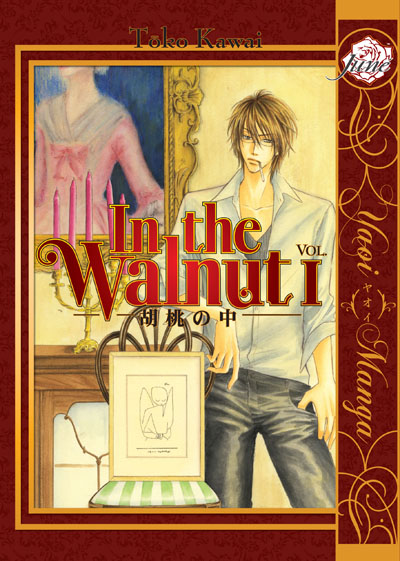
In the Walnut by Kawai Toko
Rating: 10
Juné 2010 - Biblos 2002/Libre 2007 - 3+ volumes
I've always liked Kawai Toko but it was In the Walnut that catapulted her onto my personal list of all-time favourite mangaka. In the Walnut is a wonderful slice of life manga that I believe transcends the BL genre and is a title that I'd recommend to not just the fujoshi but to any fan of warm, sweet, thoughtful, moving manga. I feel perfectly justified in rating it a 10; it deserves at least a 9 for its sheer quality of writing, and it gets my personal full marks because it's a work that grabs my heart, gives it a squeeze and wins my love.
Tanizaki is the scruffy roguish owner of art gallery 'In the Walnut'. The series is an episodic collection of stories, usually about the clients of the gallery who present Tanizaki with a problem to solve for each story arc. As well as being an expert restorer of paintings, Tanizaki is also a master forger of fakes, a skill that he employs both to deceive the unworthy and to help the troubled. Usually a grouchy cynical man who has no scruples about tricking people for a painting, when his compassion is triggered, his kindness impels him to help people in the most touching ways. Each story is a little gem in its own right and more than one moved me to the brink of tears.
Tanizaki's sidekick is his boyfriend, Nakai, an aspiring filmmaker whom he's dated since their college days. The series is unconventional for BL in that the leads are already an established couple at the start of the manga, thus the story is not the usual tale of two bishies getting it together and indeed, the romantic element usually takes a backseat to the main storyline. That's not to say there isn't much romance in the story because even if it's not headlining, it's usually there in the background; the couple's affection for each other can be seen in their everyday conversation, in their gestures and behaviour towards one other, each chapter becomes a vignette of their life together and we see the ups and downs of their relationship as they address the problems faced in each new story. Kawai blends the main narrative and the romantic element together seamlessly and the stories are consequently all gently suffused with a warmth of feeling and emotion.
Nakai is the complete opposite of the cool, unflappable Tanizaki; he's cheerful, friendly, open, honest and has a heart of gold. He provides all the cute factor in the manga and most of the comedic relief. His presence is something akin to Tanizaki's conscience; left on his own, Tanizaki gets up to all sorts of shady dealings but Nakai's honesty regularly stops Tanizaki in his tracks to question his own actions and motives. Nakai is a good foil for Tanizaki, but it's the latter who's the star of the book. He's one of the few 2D characters that I find myself attracted to! He's like a gentleman thief cross lovable rogue whom most days can't give a toss about his appearance and to Nakai's despair has a habit of not showering and wearing the same clothes for days, but give him a shave, a comb, suit him up, and he's transformed into an urbane erudite heartthrob! Nakai has an obsession with filming him and celebrates whenever clean-shaven, super-cool, Tanizaki makes a rare appearance...
As is evident in her other projects, it's obvious that Kawai loves her subject and her characters. Each story is steeped in art trivia, it's a pleasure to read for art fans, educational in an entertaining way for the uninitiated, and the plots benefit from her personal interest. The little universe she creates around the gallery and the large cast of characters that inhabit it are rich in detail and personality. Each new story arc necessarily introduces a new character and it's down to Kawai's skill in writing that those characters are deftly portrayed with a quick hand and in the matter of a few pages elicit our sympathy, or loathing, or whatever the mangaka chooses. Tanizaki and Nakai are an endearing pair and it's clear that Kawai enjoys writing stories for them, as she has been doing on and off for ten years now. Included in the first volume is the original short story about how they met, My Beautiful World, which was published before the In the Walnut series. The art easily dates the age of the piece to the earliest days of Kawai's career and it's a testament to her affection for these characters that a decade on she's still writing about them.
I can't enthuse enough about this series and want to share it with people because although it might not be for everyone, especially for those looking for a generic exciting smutty BL story (this is not that story), I know that for those who do fall for it, it will be love.
Juné 2010 - Biblos 2002/Libre 2007 - 3+ volumes
I've always liked Kawai Toko but it was In the Walnut that catapulted her onto my personal list of all-time favourite mangaka. In the Walnut is a wonderful slice of life manga that I believe transcends the BL genre and is a title that I'd recommend to not just the fujoshi but to any fan of warm, sweet, thoughtful, moving manga. I feel perfectly justified in rating it a 10; it deserves at least a 9 for its sheer quality of writing, and it gets my personal full marks because it's a work that grabs my heart, gives it a squeeze and wins my love.
Tanizaki is the scruffy roguish owner of art gallery 'In the Walnut'. The series is an episodic collection of stories, usually about the clients of the gallery who present Tanizaki with a problem to solve for each story arc. As well as being an expert restorer of paintings, Tanizaki is also a master forger of fakes, a skill that he employs both to deceive the unworthy and to help the troubled. Usually a grouchy cynical man who has no scruples about tricking people for a painting, when his compassion is triggered, his kindness impels him to help people in the most touching ways. Each story is a little gem in its own right and more than one moved me to the brink of tears.
Tanizaki's sidekick is his boyfriend, Nakai, an aspiring filmmaker whom he's dated since their college days. The series is unconventional for BL in that the leads are already an established couple at the start of the manga, thus the story is not the usual tale of two bishies getting it together and indeed, the romantic element usually takes a backseat to the main storyline. That's not to say there isn't much romance in the story because even if it's not headlining, it's usually there in the background; the couple's affection for each other can be seen in their everyday conversation, in their gestures and behaviour towards one other, each chapter becomes a vignette of their life together and we see the ups and downs of their relationship as they address the problems faced in each new story. Kawai blends the main narrative and the romantic element together seamlessly and the stories are consequently all gently suffused with a warmth of feeling and emotion.
Nakai is the complete opposite of the cool, unflappable Tanizaki; he's cheerful, friendly, open, honest and has a heart of gold. He provides all the cute factor in the manga and most of the comedic relief. His presence is something akin to Tanizaki's conscience; left on his own, Tanizaki gets up to all sorts of shady dealings but Nakai's honesty regularly stops Tanizaki in his tracks to question his own actions and motives. Nakai is a good foil for Tanizaki, but it's the latter who's the star of the book. He's one of the few 2D characters that I find myself attracted to! He's like a gentleman thief cross lovable rogue whom most days can't give a toss about his appearance and to Nakai's despair has a habit of not showering and wearing the same clothes for days, but give him a shave, a comb, suit him up, and he's transformed into an urbane erudite heartthrob! Nakai has an obsession with filming him and celebrates whenever clean-shaven, super-cool, Tanizaki makes a rare appearance...
As is evident in her other projects, it's obvious that Kawai loves her subject and her characters. Each story is steeped in art trivia, it's a pleasure to read for art fans, educational in an entertaining way for the uninitiated, and the plots benefit from her personal interest. The little universe she creates around the gallery and the large cast of characters that inhabit it are rich in detail and personality. Each new story arc necessarily introduces a new character and it's down to Kawai's skill in writing that those characters are deftly portrayed with a quick hand and in the matter of a few pages elicit our sympathy, or loathing, or whatever the mangaka chooses. Tanizaki and Nakai are an endearing pair and it's clear that Kawai enjoys writing stories for them, as she has been doing on and off for ten years now. Included in the first volume is the original short story about how they met, My Beautiful World, which was published before the In the Walnut series. The art easily dates the age of the piece to the earliest days of Kawai's career and it's a testament to her affection for these characters that a decade on she's still writing about them.
I can't enthuse enough about this series and want to share it with people because although it might not be for everyone, especially for those looking for a generic exciting smutty BL story (this is not that story), I know that for those who do fall for it, it will be love.
Labels:
DMP,
In the Walnut,
Juné,
Kawai Toko,
Kurumi no Naka
Saturday, 13 October 2012
Flutter by Tenzen Momoko
Rating: 6
Juné 2012 - Taiyo Tosho 2011
1 volume
Translation: Jocelyne Allen
I've read quite a few Tenzen Momoko titles and the enduring impression I have of them is one of gentleness. Her stories are thoughtful, sensitive, languidly paced, and all seem to share a similar calm ambiance. Even the most hotheaded of her characters are sure to stop, think and reflect on their feelings. Though the setting and characters change from book to book, her stories tend to follow the same format: boy meets boy, boy falls for boy; cue lots of character analysis, soul-searching, exploration of feelings; conclusion: they're perfect for each other and roll happily into bed together.
Since her books are all quite similar the details of each tend to blur in my mind and I can't recall which ones I preferred over the other, so I can't say that any of them are particularly exceptional but they're routinely enjoyable and I know what to expect when I pick one up, a pleasant romantic read.
Flutter is a typical Tenzen title, this time with two salarymen as the leads. On the way to work every morning, Asada's eyes are always drawn to a good looking stylish man. Even though he is a man like himself, Asada is full of curiosity and wonders what kind of person he is. When the two are paired together for a project at work, Asada is suddenly given the chance to find out. He is drawn to Mizuki from the start and the more he gets to know him the more he likes him.
The story is very much character-driven and while Asada, a straightforward honest type, doesn't leave much of an impression, Mizuki is more complex, laden with emotional baggage, describes himself as, "...a bit twisted...no picnic to hang out with" and is a mature and interesting character to read about.
In a story where there's not much plot the focus falls on the writing and the ability to express that writing through the art. While the quality of the writing is nothing special, the dialogue is natural and unaffected, and there are a few lines that stand out and do well in capturing the essence of the character or in creating the mood of the scene. For me, the artwork is not quite as good and in several instances I find that the characters' expressions don't suit the lines being said and tend to lean towards the melodramatic. One particular niggle I had was that Tenzen has a habit of recycling the same super shocked expression in what seemed to me like every other chapter, the characters are shocked by every slightest thing, make the same face every time, and its impact wore thin very quickly. I feel the manga would be much improved if Tenzen could broaden the variation and subtlety in the facial expressions she draws.
I like reading her stories, knowing that I'll be entertained for an hour or two, but none of them leave a deep impression and are not something that I look forward to eagerly. Perhaps it's her artwork holding her back, perhaps she needs some extra polish to her writing, perhaps she just needs one good plot or premise, but I don't feel as if any of her manga that I've read have made the leap to being really good. However, her books are always a dependable choice for those who like thoughtful romances with a mature attitude, and Flutter is a good example of one.
Juné 2012 - Taiyo Tosho 2011
1 volume
Translation: Jocelyne Allen
I've read quite a few Tenzen Momoko titles and the enduring impression I have of them is one of gentleness. Her stories are thoughtful, sensitive, languidly paced, and all seem to share a similar calm ambiance. Even the most hotheaded of her characters are sure to stop, think and reflect on their feelings. Though the setting and characters change from book to book, her stories tend to follow the same format: boy meets boy, boy falls for boy; cue lots of character analysis, soul-searching, exploration of feelings; conclusion: they're perfect for each other and roll happily into bed together.
Since her books are all quite similar the details of each tend to blur in my mind and I can't recall which ones I preferred over the other, so I can't say that any of them are particularly exceptional but they're routinely enjoyable and I know what to expect when I pick one up, a pleasant romantic read.
Flutter is a typical Tenzen title, this time with two salarymen as the leads. On the way to work every morning, Asada's eyes are always drawn to a good looking stylish man. Even though he is a man like himself, Asada is full of curiosity and wonders what kind of person he is. When the two are paired together for a project at work, Asada is suddenly given the chance to find out. He is drawn to Mizuki from the start and the more he gets to know him the more he likes him.
The story is very much character-driven and while Asada, a straightforward honest type, doesn't leave much of an impression, Mizuki is more complex, laden with emotional baggage, describes himself as, "...a bit twisted...no picnic to hang out with" and is a mature and interesting character to read about.
In a story where there's not much plot the focus falls on the writing and the ability to express that writing through the art. While the quality of the writing is nothing special, the dialogue is natural and unaffected, and there are a few lines that stand out and do well in capturing the essence of the character or in creating the mood of the scene. For me, the artwork is not quite as good and in several instances I find that the characters' expressions don't suit the lines being said and tend to lean towards the melodramatic. One particular niggle I had was that Tenzen has a habit of recycling the same super shocked expression in what seemed to me like every other chapter, the characters are shocked by every slightest thing, make the same face every time, and its impact wore thin very quickly. I feel the manga would be much improved if Tenzen could broaden the variation and subtlety in the facial expressions she draws.
I like reading her stories, knowing that I'll be entertained for an hour or two, but none of them leave a deep impression and are not something that I look forward to eagerly. Perhaps it's her artwork holding her back, perhaps she needs some extra polish to her writing, perhaps she just needs one good plot or premise, but I don't feel as if any of her manga that I've read have made the leap to being really good. However, her books are always a dependable choice for those who like thoughtful romances with a mature attitude, and Flutter is a good example of one.
Friday, 12 October 2012
Black Sun by Ogasawara Uki
Rating: 7
801 Media 2008 - Taiyo Tosho 2007
2 volumes
Translation: Leona Wong (v1), Jocelyne Allen (v2)
Black Sun is a sumptuous historical adventure drama set in the time of the medieval crusades against the Ottoman Empire. It tells the story of Prince Leonard de Limbourg, a European noble serving the order of the monastic knights, and his fateful meeting with General Jamal Jan, an accomplished soldier of the middle eastern empire.
Leonard is commander of Gerun fortress which has been under siege by enemy forces. Hopelessly outnumbered by the opposition, instead of choosing to fight to the death in glory Leonard takes the risky decision to negotiate with the enemy general, offering his own life in exchange for the safety and freedom of his men. Jamal tests the sincerity of Leonard's offer by ordering him to subject to Jamal's sexual advances there and then in the fortress in front of the enemy officers. Leonard feels humiliated but is resolved to see through his intent to save his men and lets Jamal have his way with him. The fortress taken, the surviving Europeans are allowed to walk free but Leonard is taken prisoner by Jamal as his spoils of war.
The first thing about the manga that I must laud is the gorgeous artwork; I love the character designs, Ogasawara draws some of the most handsome men in BL manga who have beautiful faces without being feminine and sexy muscular bodies that keep their distance from realms of bara. When a mangaka takes on a period setting, a lot of the believability of the story resides on the mangaka's ability to create a convincing looking world and Ogasawara achieves this in the detail of her background and prop art but especially in the splendidness of the costumes. Jamal's Turkish robes are opulent, majestic and elegant, and I often pause in my reading of the story to admire the artwork.
Ogasawara's artwork ranks amongst my favourites in the BL genre and although her stories are habitually entertaining I find that her work always falls a step or two short of greatness, Black Sun not being an exception but also probably the best that I've read from her.
This manga is centered on the relationship between the leads but there is a decent plot driving the story resulting in an intriguing tale about love blossoming despite differences in faiths and cultures, against a backdrop of war and all the problems that come with it. Jamal is a charismatic seme who devotes the rest of the two volumes to winning over Leonard and finding a way to keep a prisoner of war as his lover despite the condemnation of the Sultan Emperor and all those around him. Leonard feels that he would rather die than be used as a harlot and yet he is captivated by Jamal's forceful personality and can't help but give in to the pleasure of sex with him. His resistance against Jamal stems from their first humiliating encounter of forced sex in front of an enemy audience but later Leonard learns that Jamal holds a different view of the incident,
"Humiliation? You mean when I was testing the sincerity of your words? Were my soldiers laughing at you in any way? You were impressive. You cast away your pride to save your comrades. There was a reason to it...And now I'm the one being laughed at. I could've had everyone annihilated and yet, I freed them. Above all, instead of killing you I brought you here!"
I've spent more time than usual talking about the plot because it is actually quite interesting and functions well as both a period drama and as a BL romance. The subtitle of the manga is "Enslaved King", likely referring to both characters since Leonard is a captive noble and Jamal was originally a slave, recruited into the army as a boy from a land conquered by the empire, who gained exalted status as a decorated general in command of the slave division. In fleshing out their backgrounds the story touches on issues of class and caste, on faith and religion, on brutalities and consequences of war, and thus raises interesting questions as food for thought that lend the story credibility as a historical drama.
In fact, I often found that the story worked better in the dramatic parts than in the lighter-hearted romantic scenes. Ogasawara regularly tries to insert small pockets of humour into what are otherwise serious sequences and more often than not they fall flat as comedic devices. I felt that for many a scene it would have been better to cut out all comedy and left them as straight-up dramatic sequences. There is plenty of sex in the manga since Jamal is constantly horny but occasionally the sex seems gratuitous and detracts from the seriousness of the main narrative. Although both the plot and characters are interesting there is still an overall lack of depth to both and I think the manga would've benefitted from more focus on developing those core elements instead of wasting pages on cheap humour and pointless smut.
At times, the amount of unnecessary sex becomes a real weakness in the manga. In volume two there is a sequence where Jamal and Leonard chase an assassin through the Emperor's palace...and take a break for a quickie, after which they are still miraculously able to chase down the assassin. Leonard points out that, "now isn't the time" and this reader vehemently agreed. Was the mangaka required to inject some smut into the chapter to fulfil editorial requirements? If it was Ogasawara's own idea it serves as an example of how she occasionally loses perspective of the bigger picture in her stories, something I've found to be a common weakness in her other works. She's good at crafting absorbing suspenseful storylines but then inserts the occasional weak scene or what I feel are inappropriate plot developments and consequently the overall story is held back from fulfilling its potential as a really good yarn.
Another example of this in Black Sun is during Jamal's punishment scene; he is punished by the Emperor for freeing the enemy soldiers in exchange for Leonard and is dealt twenty lashings of the whip. The Emperor's lover Nicolaides, possibly the most annoying character in the manga who makes you wonder what on earth the Emperor sees in him, asks to mete out the first ten lashes and during the whipping gets turned on since he has always lusted after Jamal. Jamal tells Nicolaides to give him a blowjob and then screws him in front of an amused emperor. While the rest of the story takes pains to portray Jamal's devotion to Leonard and his resolve to make him his lover at all costs, a scene like this makes the reader question the strength of Jamal's feelings. Jamal also regularly hits on his closest aide, Isaac, who is his former lover. Is Ogasawara attempting to depict Jamal as a playboy character? I don't feel it quite works in the context of the story and I think is one of the biggest character discrepancies in the manga.
The latter half of the second volume is probably the weakest part of the story, the plot is tied up a bit too neatly and too quickly, which is a shame because the first volume was very good and promising. The second volume also suffers from what I thought was an inferior translation to the first; a different translator worked on the second volume, probably owing to the fact that there was a lengthy gap of four years between publications, and there were parts in the narrative that just didn't make much sense in the context of the dialogue which obviously led to interruptions in the flow of the story.
Although Black Sun has its weak points there is still plenty to like about this manga and I would easily recommend it as a worthwhile read.
Thursday, 4 October 2012
Same Difference by Hiiragi Nozomu
Rating: 4
Juné 2012 - Kaiousha 2011
1 volume
Translation: Jocelyne Allen
I like BL manga set in an adult working environment. I like bickering men who argue their way into a relationship. So when the back cover blurb says, "Same Difference pits suave and sexy businessmen against one another in an all-out war for bedroom dominance!" I'm easily sold. This sort of story sounds right up my street but unfortunately even my receptiveness cannot overcome what is an extremely mediocre offering.
I'll be blunt, I found it boring. Is a good reviewer allowed to say that? Oh well, there go all my pretensions of becoming a decent reviewer. I wouldn't say it's bad, I would even say it's competent in delivering a basically ok story, structure, characters and even balance of humour, angst and romance. However, it's not a good thing when I'm flicking forward through the pages to see how much more of the story I'll have to get through.
This type of story that doesn't have much of a plot depends on its characters and dialogue to impress and it falls flat on both counts. Some mangaka are good at packing a lot into a small number of pages but most aren't and Hiiragi is another of them. The first chapter is rather short at 23 pages and there just isn't enough characterisation, the two leads are cardboard cut-out BL stereotypes, one a confident sex symbol, the other a cool 'prince'. They enter into a combative relationship of sorts with absolutely no preamble which even in the realms of fiction I found hard to believe in. The next two chapters are longer and improved in giving the characters some substance but there is still no sparkle to the story. The dialogue is unoriginal, the artwork though competent is not expressive enough and I sat through the entire book feeling like I'd seen it all before.
There is also an unrelated one-shot story in the volume that's set in high school about a pair of twins and the guy they both like. I liked this one-shot more than the main story, I felt that the characters were better realised and the romance more believable. This short story served to improve my opinion of Hiiragi-sensei somewhat, but not really enough that I'd consider buying any more of her work in future.
Overall I'd say that this is a very run-of-the-mill manga and that if you're looking for salary men manga there are definitely better out there. I'd recommend Yamada Yugi's classic Close the Last Door series for starters (I grab any chance to plug my fave manga) and if you like light novels, then try Konohara Narise's The Man Who Doesn't Take Off His Clothes.
Juné 2012 - Kaiousha 2011
1 volume
Translation: Jocelyne Allen
I like BL manga set in an adult working environment. I like bickering men who argue their way into a relationship. So when the back cover blurb says, "Same Difference pits suave and sexy businessmen against one another in an all-out war for bedroom dominance!" I'm easily sold. This sort of story sounds right up my street but unfortunately even my receptiveness cannot overcome what is an extremely mediocre offering.
I'll be blunt, I found it boring. Is a good reviewer allowed to say that? Oh well, there go all my pretensions of becoming a decent reviewer. I wouldn't say it's bad, I would even say it's competent in delivering a basically ok story, structure, characters and even balance of humour, angst and romance. However, it's not a good thing when I'm flicking forward through the pages to see how much more of the story I'll have to get through.
This type of story that doesn't have much of a plot depends on its characters and dialogue to impress and it falls flat on both counts. Some mangaka are good at packing a lot into a small number of pages but most aren't and Hiiragi is another of them. The first chapter is rather short at 23 pages and there just isn't enough characterisation, the two leads are cardboard cut-out BL stereotypes, one a confident sex symbol, the other a cool 'prince'. They enter into a combative relationship of sorts with absolutely no preamble which even in the realms of fiction I found hard to believe in. The next two chapters are longer and improved in giving the characters some substance but there is still no sparkle to the story. The dialogue is unoriginal, the artwork though competent is not expressive enough and I sat through the entire book feeling like I'd seen it all before.
There is also an unrelated one-shot story in the volume that's set in high school about a pair of twins and the guy they both like. I liked this one-shot more than the main story, I felt that the characters were better realised and the romance more believable. This short story served to improve my opinion of Hiiragi-sensei somewhat, but not really enough that I'd consider buying any more of her work in future.
Overall I'd say that this is a very run-of-the-mill manga and that if you're looking for salary men manga there are definitely better out there. I'd recommend Yamada Yugi's classic Close the Last Door series for starters (I grab any chance to plug my fave manga) and if you like light novels, then try Konohara Narise's The Man Who Doesn't Take Off His Clothes.
Labels:
DMP,
Docchi mo Docchi,
Hiiragi Nozomu,
Juné,
Same Difference
Wednesday, 29 August 2012
Secretary's Job? by Araya Miki
Rating: 7
Juné 2012 - Taiyo Tosho 2011
1 volume
Translation: Laura Russell
"Adorable and super-talented Takase is the star secretary of his company! His reputation’s been built on his amazing ability to make anyone he works with a success…but what will happen when he’s assigned to the lazy son of the big boss? Can a prodigy improve the reputation of a handsome slacker?" - Juné
Takase's legendary skills basically consist of staring at his assigned target with big round eyes shining with faith and belief until the slacker is guilt-tripped into doing some work, or generally being so cute and adorable that the slacker is motivated to work just to get into Takase's good books. A serious manga this is not. What it is is a gag manga crossed with BL. I defy you not to chuckle or at least smirk at some point in the book. The characters, their actions and the scenarios are ridiculous to the extreme but the humour is very much tongue-in-cheek and is oftentimes a knowing send-up of the BL genre.
Araya has a distinctive good-humoured narrative style that she employs for all her books so readers will either like her work or not. Much like slapstick comedy, the story is not to be taken seriously but read with a wry suspension of disbelief and hopefully with a grin on the face. I, for one, am a fan and always look forward to her books and the silly antics that her characters get up to. Yes, they're silly but Araya is well aware and regularly pokes fun at her own characters with funny narrative asides.
Secretary's Job is a fun lighthearted title for those who like a laugh. The humour won't be to everyone's taste but it is quite unlike most other humour you get in the BL genre (the most similar I can think of is Sakarai Shushushu's work) so even if you're somewhat dubious it could still be worth trying out just for the novelty factor.
Juné 2012 - Taiyo Tosho 2011
1 volume
Translation: Laura Russell
"Adorable and super-talented Takase is the star secretary of his company! His reputation’s been built on his amazing ability to make anyone he works with a success…but what will happen when he’s assigned to the lazy son of the big boss? Can a prodigy improve the reputation of a handsome slacker?" - Juné
Takase's legendary skills basically consist of staring at his assigned target with big round eyes shining with faith and belief until the slacker is guilt-tripped into doing some work, or generally being so cute and adorable that the slacker is motivated to work just to get into Takase's good books. A serious manga this is not. What it is is a gag manga crossed with BL. I defy you not to chuckle or at least smirk at some point in the book. The characters, their actions and the scenarios are ridiculous to the extreme but the humour is very much tongue-in-cheek and is oftentimes a knowing send-up of the BL genre.
Araya has a distinctive good-humoured narrative style that she employs for all her books so readers will either like her work or not. Much like slapstick comedy, the story is not to be taken seriously but read with a wry suspension of disbelief and hopefully with a grin on the face. I, for one, am a fan and always look forward to her books and the silly antics that her characters get up to. Yes, they're silly but Araya is well aware and regularly pokes fun at her own characters with funny narrative asides.
Secretary's Job is a fun lighthearted title for those who like a laugh. The humour won't be to everyone's taste but it is quite unlike most other humour you get in the BL genre (the most similar I can think of is Sakarai Shushushu's work) so even if you're somewhat dubious it could still be worth trying out just for the novelty factor.
Labels:
Araya Miki,
DMP,
Hishou no Oshigoto,
Juné,
Secretary's Job
Sunday, 5 August 2012
In These Words 1 by Guilt | Pleasure

801 Media 2011 - 1+ volumes
www.guiltpleasure.com
I bought In These Words for two reasons: first for the amazing artwork and second for the interesting background to its creation. It's a collaborative work by writer 'Kichiku Neko' and illustrator 'TogaQ' (aka Jo Chen), a Taiwanese duo who are now based in the US (at least, Chen is, not sure on the Neko's whereabouts). They started off by self-publishing In These Words in English and Chinese but then somewhere along the line they got picked up by Libre, a big publisher of BL in Japan, and got serialised in Be x Boy Gold magazine, which boasts the likes of Viewfinder and Haru wo Daite Ita among its pages. Possibly the first foreign mangaka to be published by Libre, their reputation preceded them and when American publisher DMP got ahold of the title for their 801 line I was eager to check out their work.
The artwork is gorgeous; if you're a fan of art in manga then this title is well worth your money on the art alone. The 801 book includes several double-page colour inserts of Chen's beautiful colour illustrations. If you're looking for a story that's a little different from the usual BL fare then this is definitely worth checking out because, oh yes, it's different. The story is about a psychiatrist (or psychologist?) facing off a sadistic serial killer; the story is dark, graphically violent and not for the squeamish.
On the basis of the stellar art and the unconventional storyline I'm tempted to push up my rating of this title to a 7, however, the quality of the writing and storyboarding just doesn't match up so overall it gets a fairly average 6. The premise is interesting, the characters are potentially interesting, however the whole thing falls rather flat for me and at no point did the story nor the characters really engage me. I had a real problem with the structure of the story and the pacing. There are two narratives going on, the main one where the psychiatrist meets the killer in a police safe house to extract a confession of his crimes, and a second narrative that's made up of what could be the psychiatrist's nightmares or memories or premonitions - he's not sure what they are and hell if I had any idea. The nightmare scenes are interspersed with the main narrative and the result is a very disjointed plot and erratic pacing. Perhaps when more of the story is revealed in the next volume then things will make more sense but volume one left me very confused.
Another big problem I had was with the utter lack of romance in the story. So ok, you don't really want to get all that close with a killer but there was no spark of anything between the main characters, no whiff of any Stockholm Syndrome developing yet nominally this is supposed to be a BL story. There are several graphic sex scenes that are part of the nightmare narrative (possibly memories?) but these are proper rape scenes that are violent and devoid of intimacy and all about power play. Frankly, there's nothing remotely sexy about these scenes and the whole tone of the story is rather cold and clinical, set in part by the attitude of the psychiatrist, who's the cool, calm, analytic type, and not helped at all by the methodical unimpassioned way the killer goes about his raping and killing.
Volume one fell rather short of expectations but the story is still interesting enough to leave me curious to find out what happens next and I will be buying the next volume whenever it comes out.
Subscribe to:
Posts (Atom)